
Beit el-Wali Temple is a small rock-cut temple built by Ramesses II in Nubia, and it holds some of the most vivid battle and tribute scenes of his reign. Today it stands at New Kalabsha, close to the Aswan High Dam, after being moved in the 1960s to escape the rising waters of Lake Nasser. If you want a quieter Nubian stop than the famous names, this temple rewards a slow, careful look.
Key Takeaways
- Ramesses II built Beit el-Wali Temple in Nubia in the thirteenth century BCE.
- Its walls show royal battle scenes and Nubian tribute.
- It was relocated to New Kalabsha in the 1960s and can be visited on a private Lake Nasser temples cruise arranged on request.
What Is the History of Beit el-Wali Temple?
Ramesses II built Beit el-Wali in Nubia during the thirteenth century BCE. It was the first in a series of temples he commissioned in the region, and it formed part of his wider building program in Egypt’s southern lands. A temple here told Nubians and Egyptians alike that the pharaoh’s authority reached far beyond Egypt’s core territory.
A partly rock-cut plan
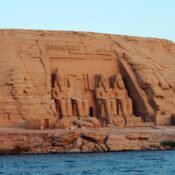
A rock-cut temple is carved partly or wholly into natural rock. Beit el-Wali Temple combines built spaces with a sanctuary cut directly into the stone. Visitors enter a forecourt, pass into an anteroom with two columns, and then reach the sanctuary, where three rock-cut cult images sit inside the rock itself. This inward path makes the temple very different from a freestanding building.
The name means “House of the Holy Man.” It may refer to a Christian hermit who later used the site, but that link is uncertain. What is clear is that the temple served as a church during the early Coptic period, adding a later chapter to its history.
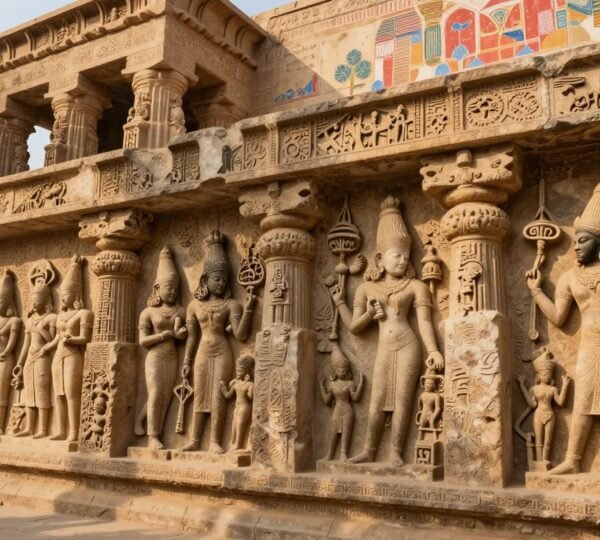
Detailed relief carvings cover the sanctuary walls
What Do the Reliefs at Beit el-Wali Show?
The walls show Ramesses II both in battle and receiving tribute, presenting him as commander and ruler side by side.
Military scenes
The forecourt reliefs depict campaigns in Nubia, Libya and Syria. They use scale, pose and action to place the king at the center of events, with his opponents shown in relation to his power. These are not neutral snapshots. They are royal statements carved for everyone who entered the temple.
Nubian tribute
Other scenes show Nubian tribute brought before the king. The procession includes giraffes, monkeys and cattle, along with ebony, ivory and gold. Look at how the carved figures organize people, animals and objects along the wall. They turn tribute into a formal presentation rather than a simple list of goods. Remember that these reliefs preserve a royal view of Nubia, not a complete picture of Nubian life.
Gods and surviving color
Inside, the scenes show the king worshipping Amun-Re, Re-Horakhti, Khnum and Anuket. Some original color survives in these inner scenes, while paint has disappeared from the forecourt reliefs. That difference is one reason the interior is worth lingering over.
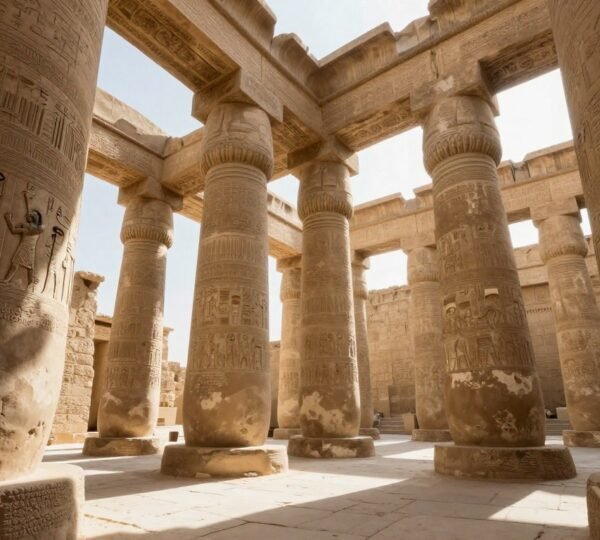
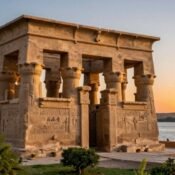
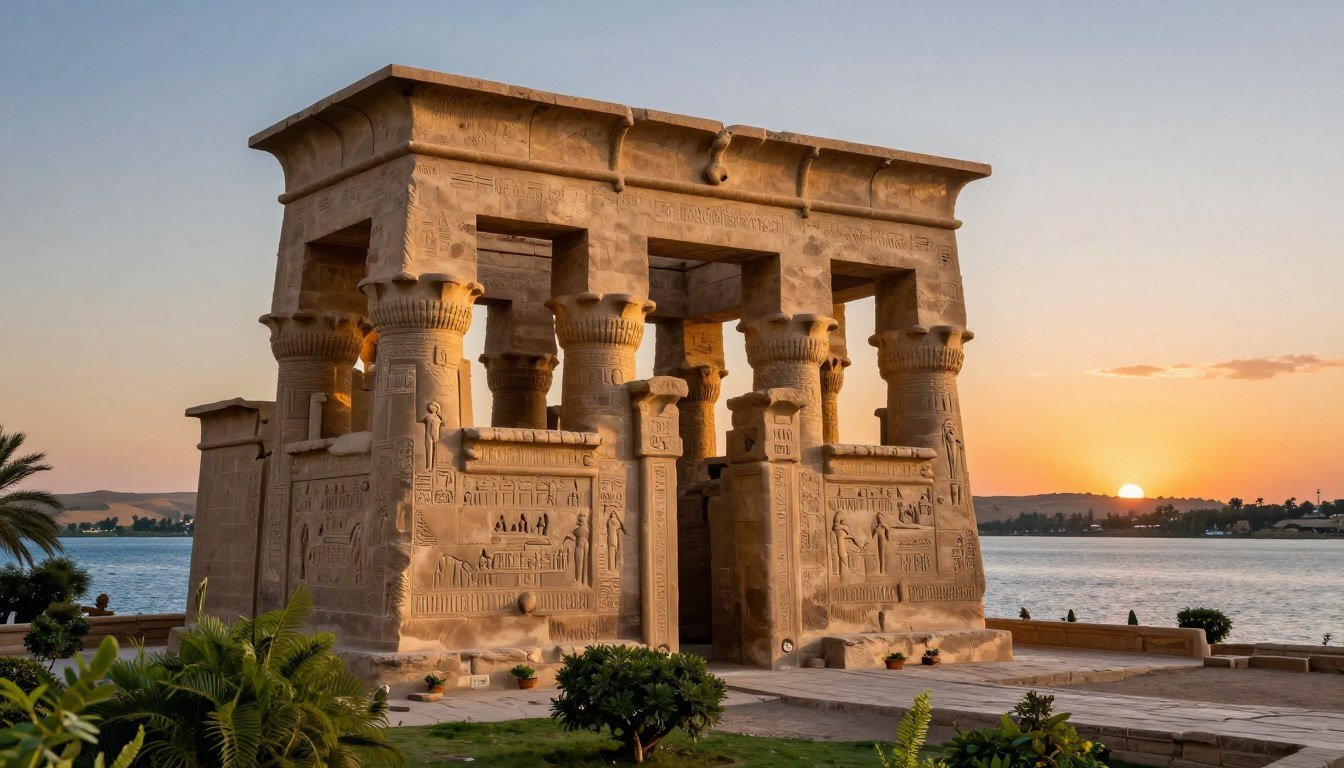
Papyrus capital columns frame the sky inside the Roman-era Kiosk
Why Was Beit el-Wali Relocated?
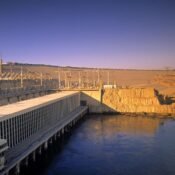
The Aswan High Dam threatened many Nubian monuments with flooding. In response, UNESCO launched an international campaign that ran from 1960 to 1980. The wider effort is recognized today on the World Heritage List as the Nubian Monuments from Abu Simbel to Philae, inscribed in 1979. The Egyptian Ministry of Tourism and Antiquities also describes the site on its World Heritage page.
Beit el-Wali originally stood about fifty kilometers south of Aswan. A Polish archaeological team coordinated its relocation in the 1960s, with financing from a Swiss institute and the Oriental Institute of the University of Chicago. The temple was reassembled at New Kalabsha, near the High Dam, on higher ground above the lake. Its new setting keeps the temple close to Kalabsha Temple and the Kiosk of Qertassi, so visitors can walk between the monuments in a single stop and compare how each one was built and used.
What Else Is at New Kalabsha?
New Kalabsha brings several relocated monuments together, but they belong to different periods and traditions. For a useful overview, see the New Kalabsha entry on Wikipedia or the Madain Project guide.
- Beit el-Wali: Ramesses II’s small rock-cut temple, the oldest monument here.
- Kalabsha Temple: built under Augustus and dedicated to Mandulis, a Roman-period temple and the largest freestanding temple in Egyptian Nubia.
- Kiosk of Qertassi: a small Roman-period monument with slender papyrus columns, also moved to this site.
Treat each monument on its own terms. They share a location because of the rescue campaign, not because they were one complex.
How to Visit Beit el-Wali on a Lake Nasser Temples Cruise
Beit el-Wali Temple is small, so most visitors spend around thirty minutes inside.Beit el-Wali is one of the temple stops on a Lake Nasser temples cruise, and Oceanus Tours & Travel organizes this cruise as a private trip on request, tailored to your dates and group. Contact us to request a private Lake Nasser temples cruise and we will plan the route and timing with you. Because the cruise follows the lake, you reach the temples by water and see the setting that made the rescue campaign necessary, which is hard to appreciate from a car window.
Beit el-Wali is only one part of a longer story along the lake. The other Lake Nasser temples are worth reading about before you travel:
- Kalabsha Temple, rebuilt stone by stone near the High Dam
- Wadi es-Sebua, Ramesses II’s sphinx-lined Valley of the Lions
- Dakka, the Nubian temple of Thoth saved from the lake
- Maharraqa, an unfinished Roman temple to Isis and Serapis
- Amada, Nubia’s oldest temple, with painted reliefs
- Derr, another rock-cut temple built by Ramesses II
If you prefer to stay on land, you can combine Beit el-Wali and Kalabsha with other Aswan highlights on one of our Aswan day tours, such as the private half-day tour of Kalabsha Temple and the Nubian Museum.
Whichever option you choose, confirm these details before you travel:
- Transfers to and from New Kalabsha
- Access arrangements for each monument
- Whether a guide is arranged
- Which fees and other inclusions are covered
Conclusion
Beit el-Wali connects Ramesses II’s Nubian building program with the international effort that saved Nubia’s monuments. Its reliefs make most sense when you read them within that setting and history. To plan a visit, contact Oceanus Tours & Travel and we will confirm the transfers and inclusions for your dates.
A visit to Beit el-Wali Temple fits well into a day at New Kalabsha, together with the nearby Temple of Kalabsha and the Kiosk of Qertassi.
FAQ
What does Beit el-Wali mean?
It means “House of the Holy Man.” The name may refer to a Christian hermit who used the temple later, though that link is uncertain. The temple also served as a church during the early Coptic period.
What does the Nubian tribute scene show?
It shows giraffes, monkeys, cattle, ebony, ivory and gold brought before Ramesses II. The scene records a royal view of wealth and exchange, not a full account of Nubian life.
Can I see Beit el-Wali and Kalabsha Temple together?
Yes. Both were reassembled at New Kalabsha near the High Dam, and many visitors see them on the same excursion. Confirm transfers, access, guide arrangements and inclusions for the option you choose.