
The Valley of the Kings is a New Kingdom royal and elite burial ground on Luxor’s West Bank, best approached as a historic landscape as well as a group of decorated tombs. Visitors enter chambers cut into rock beneath a bright, stark landscape, where painted walls bring ancient beliefs into view. This guide explains where the valley is, how its tombs are catalogued, which tombs to know, and how to plan a visit from Luxor or from the coast.
Key Takeaways
- The site lies on the West Bank of the Nile, across from modern Luxor.
- It includes over sixty tombs, and about twenty of them held kings.
- Tutankhamun’s tomb, KV62, was found on 4 November 1922.
- The Ministry of Tourism and Antiquities page lists opening hours from 6:00 a.m. to 5:00 p.m.
- Which tombs are open can change, so confirm access before you go.
Where Is the Valley of the Kings, and Why Was It Chosen?
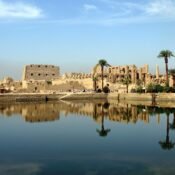
The Valley of the Kings lies on the West Bank of the Nile at Thebes, across from modern Luxor in Upper Egypt, which makes it part of the wider Theban landscape of temples and burial grounds. It is divided into the East Valley and the West Valley. The East Valley is the more famous one and contains most of the known royal tombs, while the West Valley has far fewer burials.
The site served as a royal and elite burial ground during the New Kingdom (c. 1550–1069 BC). Its limestone hills offered a secluded setting for tombs cut into rock, and a peak above the valley that resembles a pyramid, known as Al-Qurn, forms part of the landscape. The valley belongs to Ancient Thebes with its Necropolis, a UNESCO World Heritage Site since 1979.
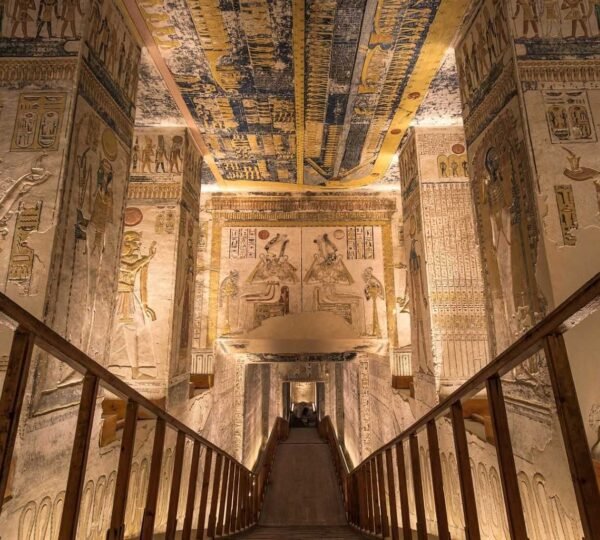
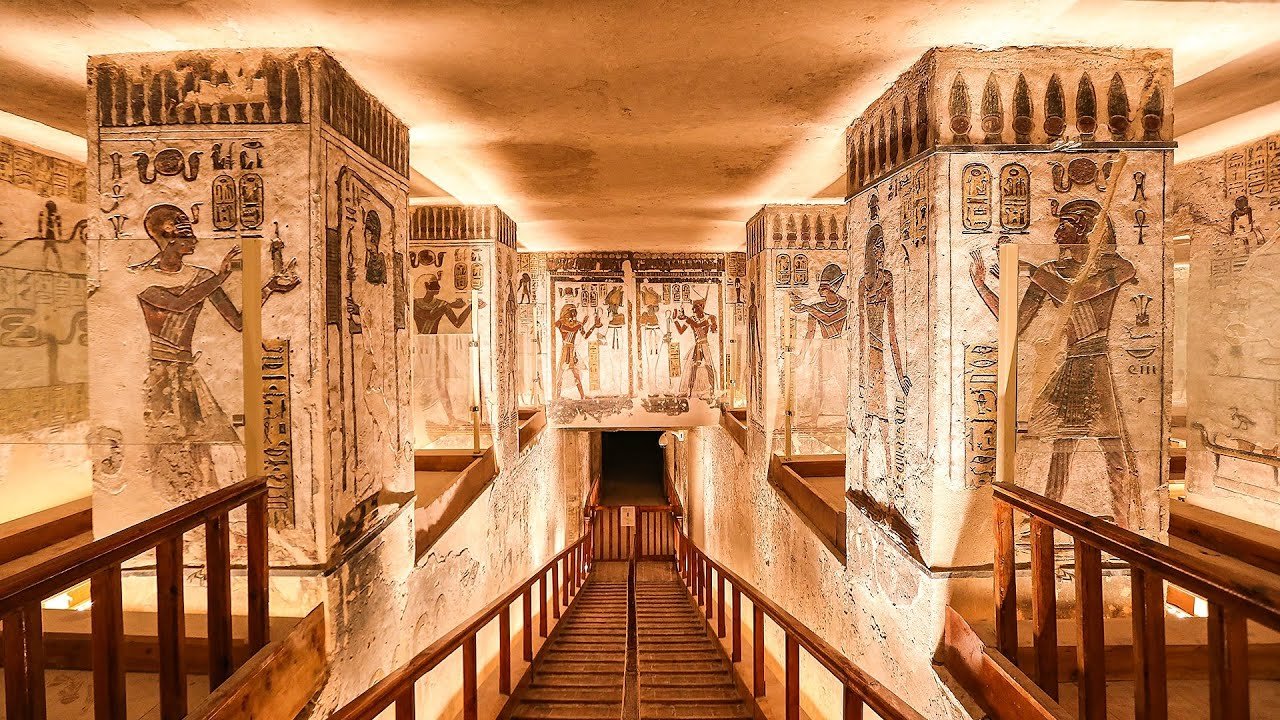
Painted reliefs line the route as a wooden walkway leads deeper into the tomb.
How Tomb Numbers and Decoration Help Explain the Site
The Ministry of Tourism and Antiquities describes the site as including over sixty tombs, plus about twenty unfinished ones. About twenty held kings, while others held royal wives and children, nobles and even animals. So a tomb count does not equal a count of pharaohs.
Tombs carry KV numbers, short for Kings’ Valley. In 1827, John Gardner Wilkinson established the numbering system still used today, and later discoveries were numbered in order of discovery. A number is only a catalogue label, not a ranking, and it does not tell you whether a tomb is open or well preserved. The Theban Mapping Project keeps detailed records of the tombs.
Tombs cut into rock can include corridors, halls and burial chambers, and their painted or carved decoration often draws on religious beliefs about the afterlife. Not every tomb has the same scenes or state of preservation.
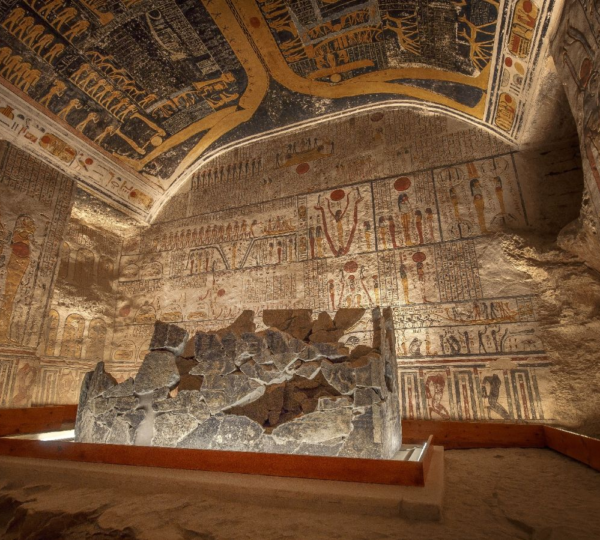
A decorated burial chamber with a stone sarcophagus at its center.
Which Tombs Should Beginners Know?
KV62: Tutankhamun
Howard Carter’s team found the entrance to KV62, the tomb of Tutankhamun, on 4 November 1922. It was the only virtually intact royal tomb ever found in the valley, and Tutankhamun’s mummy remains there. Its fame can overshadow the rest of the site, so treat it as one tomb among many.
KV5: the sons of Ramesses II
KV5 was built for the sons of Ramesses II. More than 120 chambers are known, which makes it one of the largest tombs in the valley, and excavation and conservation have continued there.
KV35 and KV20
KV35 is the tomb of Amenhotep II. Priests of Amun moved royal mummies into the valley’s tombs for protection, and some were stored in KV35. KV20 descends in a winding course for more than 200 meters, and it is associated with Hatshepsut and her father Thutmose I.
The West Valley has only two royal tombs, those of Amenhotep III (KV22) and Ay (KV23).
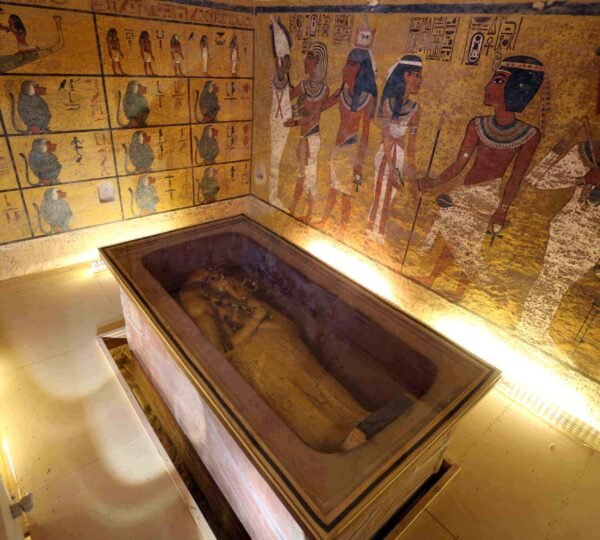
The burial chamber of Tutankhamun’s tomb, KV62, found on 4 November 1922.
What to Know Before Visiting the Valley of the Kings
The Ministry of Tourism and Antiquities lists the Valley of the Kings as open daily from 6:00 a.m. to 5:00 p.m., with separate ticket categories for foreigners and Egyptians. Hours, tickets and the tombs open to visitors can change, so check the official Valley of the Kings page and confirm access close to your visit. Tombs close periodically for conservation, so do not plan around one specific tomb.
The general ticket covers three tombs of your choice from those open that day. Some tombs, such as Tutankhamun’s KV62, need a separate extra ticket, so ask our team which tombs are included in your plan.
Photography rules can differ by device and by tomb, so ask staff at the entrance and follow the signs inside each chamber. Wear light clothing, a hat and comfortable shoes, because the terrain is open and sunny.
Getting to the Valley of the Kings
Most visitors reach the valley from Luxor, since it lies across the Nile from the city. Our Ancient West Bank of Luxor private sightseeing and our East and West Bank full-day tour cover the West Bank with a guide. Ask our team to confirm that the Valley of the Kings is part of your chosen itinerary and which tombs are open.
If you are staying elsewhere, you can reach Luxor by car or by air. Browse our overday Luxor tour from Hurghada, our private day tour to Luxor from Cairo by flight or our overnight trip to Luxor from Sharm by flight.
To combine the tombs with other sites, consider our Luxor East Bank highlights tour, the Luxor and Mummification museums tour or the excursion to Dendera and Abydos. Early risers can add a Luxor hot air balloon ride.
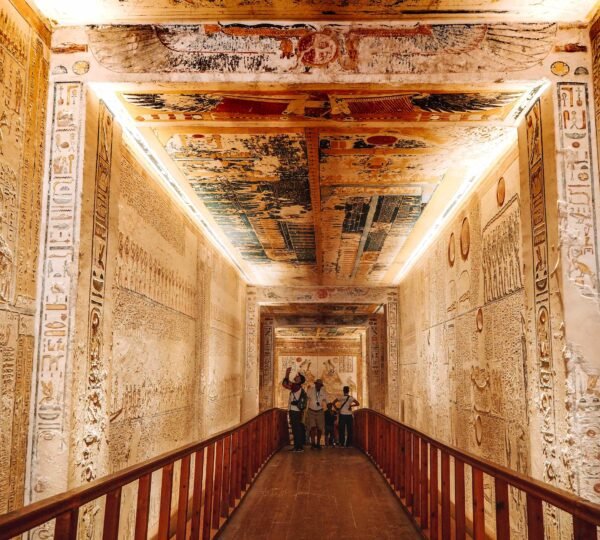
Hieroglyphs and painted ceiling scenes cover the walls of a royal tomb corridor.
How Can Visitors Help Protect the Tombs?
The tombs are fragile. Flash floods still carry debris into open tombs, and water can enter through shale that expands when wet. Repeated visits also affect painted surfaces, so careful behavior matters.
- Keep your hands away from decorated walls.
- Follow barriers, signs and staff instructions in each chamber.
- Take all waste with you.
Plan a Guided Visit
A licensed Egyptologist helps you read the painted scenes and understand each tomb’s layout. Browse our Luxor day tours, or build a longer journey with our Nile cruises, dahabiya cruises or Egypt travel packages. For more practical advice, read our Luxor travel tips.
Conclusion
The Valley of the Kings rewards a visit planned around both its history and the care its tombs require. Access can change, so plan around the tombs that are open when you visit. To confirm what is included in your itinerary, contact Oceanus Tours & Travel.
FAQ
Is the Valley of the Kings in Upper or Lower Egypt?
Upper Egypt, on the West Bank of the Nile across from modern Luxor.
How many tombs are in the Valley of the Kings?
The Ministry of Tourism and Antiquities says the site includes over sixty tombs, plus about twenty unfinished ones. About twenty of the tombs held kings.
How long should you spend in the Valley of the Kings?
Many visitors spend a couple of hours, and longer if they want a slower pace. The time also depends on which tombs are open when you arrive.
Is Tutankhamun still in his tomb?
Yes, Tutankhamun’s mummy remains in KV62. Howard Carter’s team found the entrance on 4 November 1922.
Where can I check the Valley of the Kings entry fee?
Fees change, so check the Ministry of Tourism and Antiquities Valley of the Kings page. On a private tour with us, confirm in advance whether admission is included.