
Luxor Temple is an ancient sanctuary on the Nile’s east bank in the heart of modern Luxor, built to celebrate the renewal of Egypt’s kingship. It is compact, atmospheric after dark, and easy to combine with Karnak on a Luxor day tour. This guide explains its history, the Opet Festival, what to see, opening hours, and how to plan your visit.
Key Takeaways
- Amenhotep III and Ramesses II shaped most of the temple.
- Its ritual purpose was royal renewal, linked to Karnak by the Opet Festival.
- The Avenue of Sphinxes, about 2.7 km long, once connected the two temples.
- The active Abu el-Haggag Mosque stands inside the site.
- Allow one to two hours, and check the Ministry of Tourism and Antiquities page for current hours and tickets.
What Is Luxor Temple and Why Is It Important?
Luxor Temple stands in ancient Thebes, on the east bank of the Nile. Its ancient name, ipet resyt, means “the southern sanctuary.” Instead of honoring a single god or a dead king, it supported the renewal of kingship, with rituals that reaffirmed the bond between the pharaoh and the god Amun.
Together with Karnak and the west bank tombs, it belongs to Ancient Thebes with its Necropolis, a UNESCO World Heritage Site since 1979. If you are new to the city, our Luxor travel tips give a helpful overview before you go.
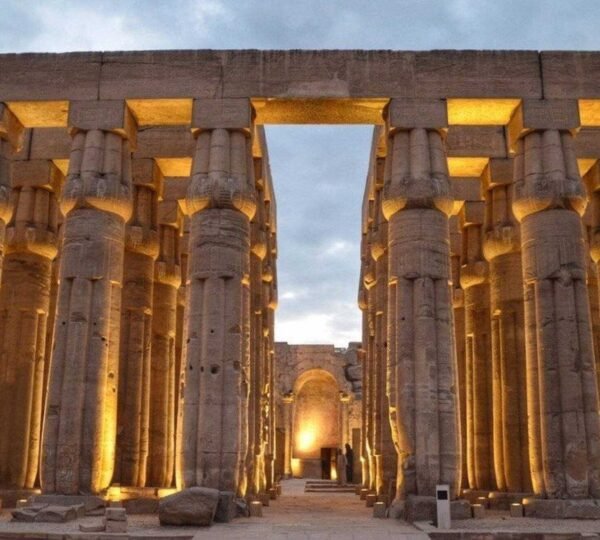
Lit papyrus columns frame the inner courtyard of Luxor Temple at dusk.
Luxor Temple History: Who Built It?
The temple grew over centuries. The oldest surviving structure is a shrine from the reign of Hatshepsut. Amenhotep III then built the core of the temple, including the Great Colonnade and the sun court. Under Tutankhamun and Horemheb, the colonnade’s decoration was completed with scenes of the Opet Festival.
Ramesses II later added a peristyle courtyard and a massive entrance pylon, with colossal statues and a pair of obelisks. One obelisk still stands in place. The other has stood in the Place de la Concorde in Paris since 1836.
Alexander the Great also appears here. In the barque shrine he is shown as a pharaoh before Amun, with his name in royal cartouches. These scenes show royal image-making and do not prove that he visited Thebes.
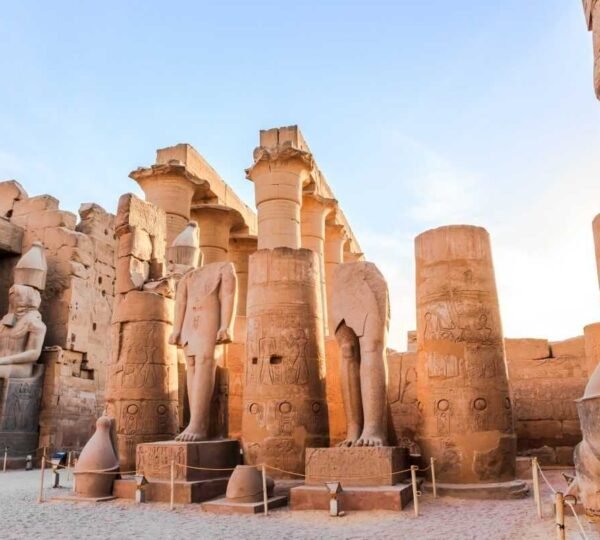
Statues of Ramesses II stand among the columns of the court at Luxor Temple.
What to See Inside Luxor Temple
Follow the route from the entrance to the inner sanctuary:
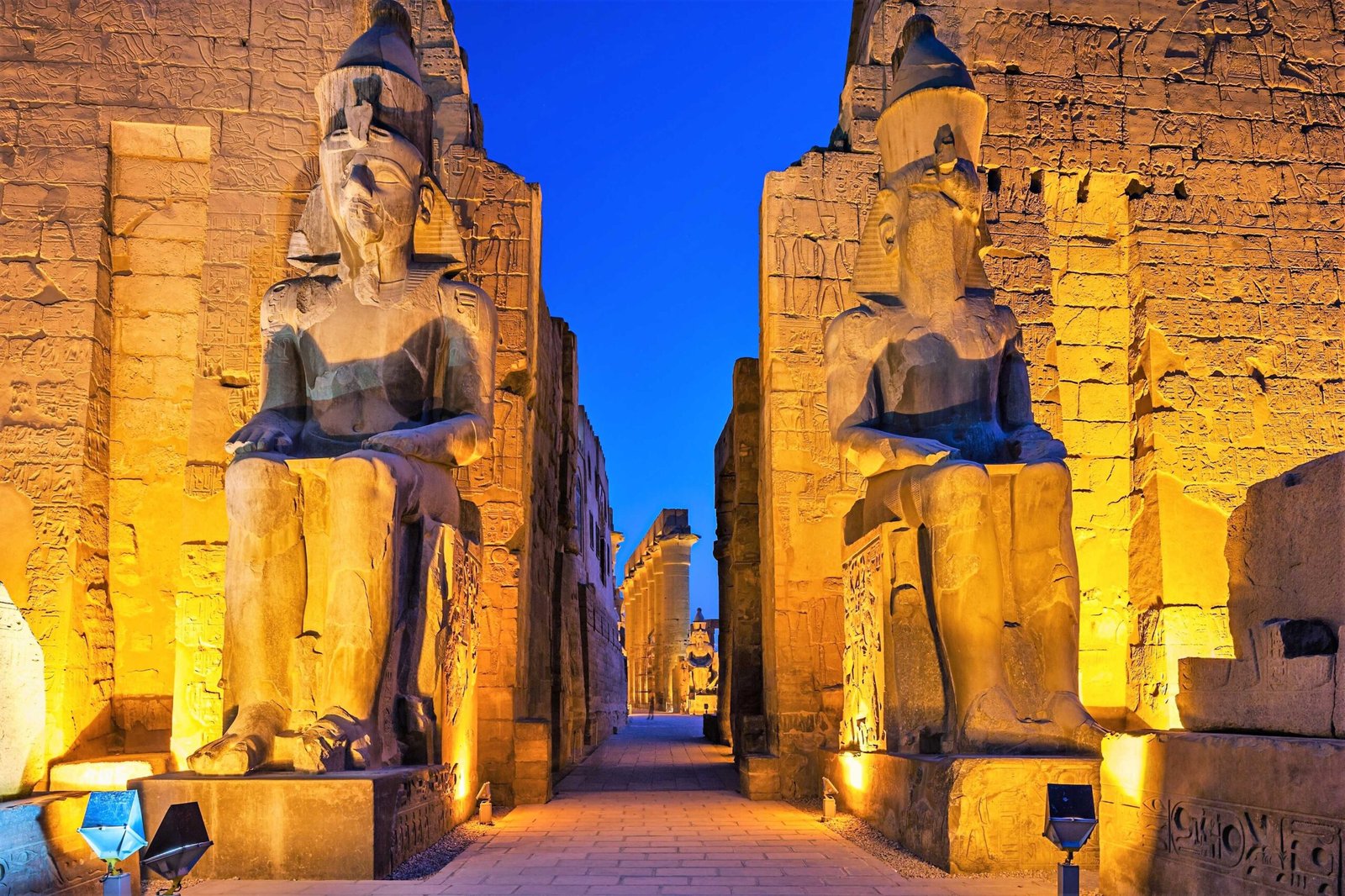
- Pylon and obelisk: Ramesses II’s gateway frames the approach, with the surviving obelisk and colossal seated statues.
- Court of Ramesses II: an open court of statues and reliefs, with the Abu el-Haggag Mosque built above one corner.
- Great Colonnade: towering papyrus columns carved with Opet Festival scenes.
- Sun court and hypostyle hall: Amenhotep III’s columned court leads into the inner halls.
- Inner sanctuary and barque shrine: the most enclosed rooms, where the ritual focus becomes clearest.
Look closely and you can also spot Roman paintings and later additions, which show how the temple was reused for centuries.
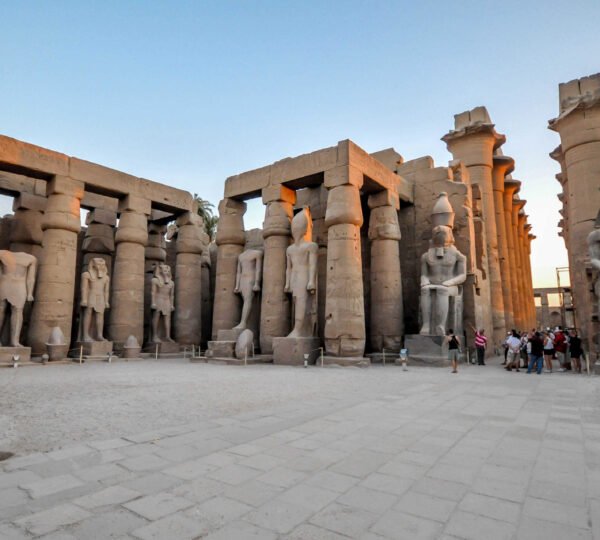
Visitors gather in the open courtyard of Luxor Temple, lined with statues and columns.
Opet Festival and the Avenue of Sphinxes
During the annual Opet Festival, the cult images of Amun, Mut and Khonsu were carried in procession from Karnak to Luxor Temple. The procession tied the god’s power to the renewal of the king. The Avenue of Sphinxes, about 2.7 km (1.7 miles) long, gave the route its ceremonial setting, and the restored avenue reopened to the public in 2021.
Karnak and Luxor Temple remain separate visits. To see both with a guide, consider our East and West Bank full-day tour.
Abu el-Haggag Mosque: A Living Place of Worship
Inside the Court of Ramesses II stands the Abu el-Haggag Mosque, still used for daily prayer. The mosque honors the Sufi sheikh Yusuf Abu el-Haggag, and its annual moulid is still celebrated. Sources differ on its exact dates, and parts of the site also show earlier Roman and Christian use. Dress modestly, stay quiet and follow signs near worshippers. You can read more in this University of Chicago note on the mosque.
Luxor Temple Opening Hours and Tickets
The Ministry of Tourism and Antiquities lists Luxor Temple as open daily from 6:00 a.m. to 8:00 p.m. Hours and tickets can change, so check the official Luxor Temple page before you go. If you book a guided tour with us, contact our team to confirm what is included, such as admission, guide and transfers.
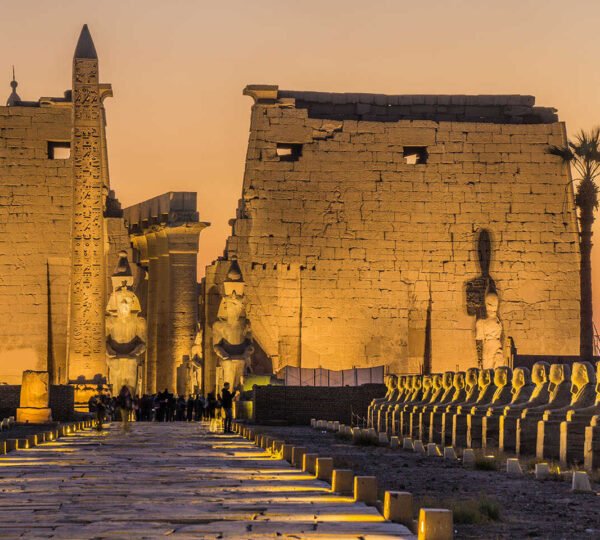
The pylon, obelisk and Avenue of Sphinxes lead visitors to Luxor Temple at sunset.
How Long to Spend and When to Visit
Allow one to two hours for a relaxed visit, or longer with a guide. Go early to avoid the heat and tour groups, or late afternoon for softer light. Early risers can pair a morning visit with a Luxor hot air balloon ride. At night the temple is floodlit and spectacular, and you can admire it from the Corniche.
Luxor Temple vs Karnak Temple
Karnak is vast, spread over many hours, and dedicated mainly to Amun. Luxor Temple is smaller, more compact, and easier to cover in one or two hours. Visit both if you can: Karnak shows the scale of Theban religion, while Luxor Temple shows how kingship, ritual and later history meet in one place. They stand roughly 3 km apart and are separate visits, so plan transport between them.
Guided Visit or Independent Visit?
A licensed Egyptologist explains the reliefs, inscriptions and ritual layout that are easy to miss alone. Browse our Luxor day tours to see the temple with a guide. Coming from the coast? Explore our Hurghada day tours for options that reach Luxor.
For a longer journey, see our Nile cruises, dahabiya cruises or Egypt travel packages. Always confirm what is included before you book.
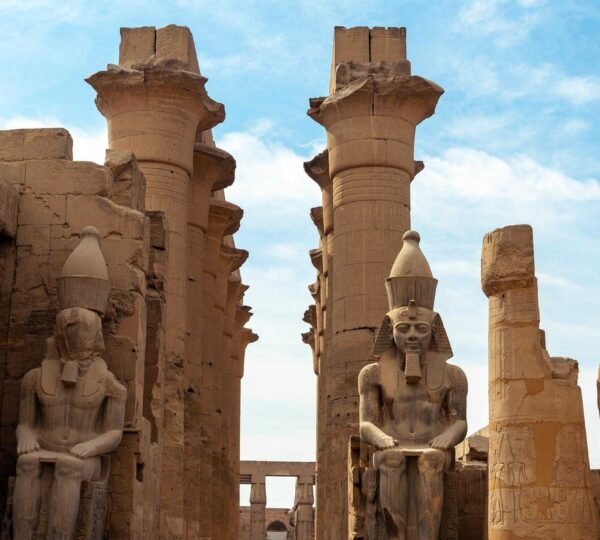
Colossal seated statues of Ramesses II flank the pylon entrance of Luxor Temple
Safety and Travel Preparation
Check your government’s latest Egypt travel advice, such as the U.S. State Department or UK FCDO, before booking, because advisories change. Keep your belongings secure in crowds, carry your passport details, and check visa rules for your nationality. Bringing a drone into Egypt is prohibited without official permission, so leave yours at home.
Conclusion
Luxor Temple is best understood as a royal ritual site and a living part of modern Luxor. Allow time to read its layers, from Amenhotep III’s columns to the mosque above, and confirm hours before you go. To plan your visit, contact Oceanus Tours & Travel.
FAQ
What is the significance of Luxor Temple?
It was built to support the renewal of kingship, and the Opet Festival linked it with Karnak each year.
Where can I check the Luxor Temple entrance fee?
Fees change, so check the Ministry of Tourism and Antiquities Luxor Temple page before your visit. On a private tour with us, confirm in advance whether admission is included.
How much time do you need at Luxor Temple?
One to two hours is enough for most visitors, and a guided visit may take longer.
What are the most famous temples in Luxor?
Karnak Temple, Luxor Temple and Medinet Habu are the best known, along with Hatshepsut’s temple on the west bank. Our East and West Bank tour covers the main sites with a guide.
What are the most famous temples in Egypt?
Karnak, Luxor Temple, Abu Simbel, Edfu, Philae and Dendera are among the best known. You can visit Philae on our private Aswan highlights tour, and reach Abu Simbel on our Abu Simbel day tour from Aswan.