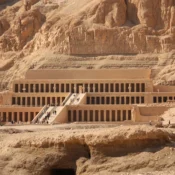

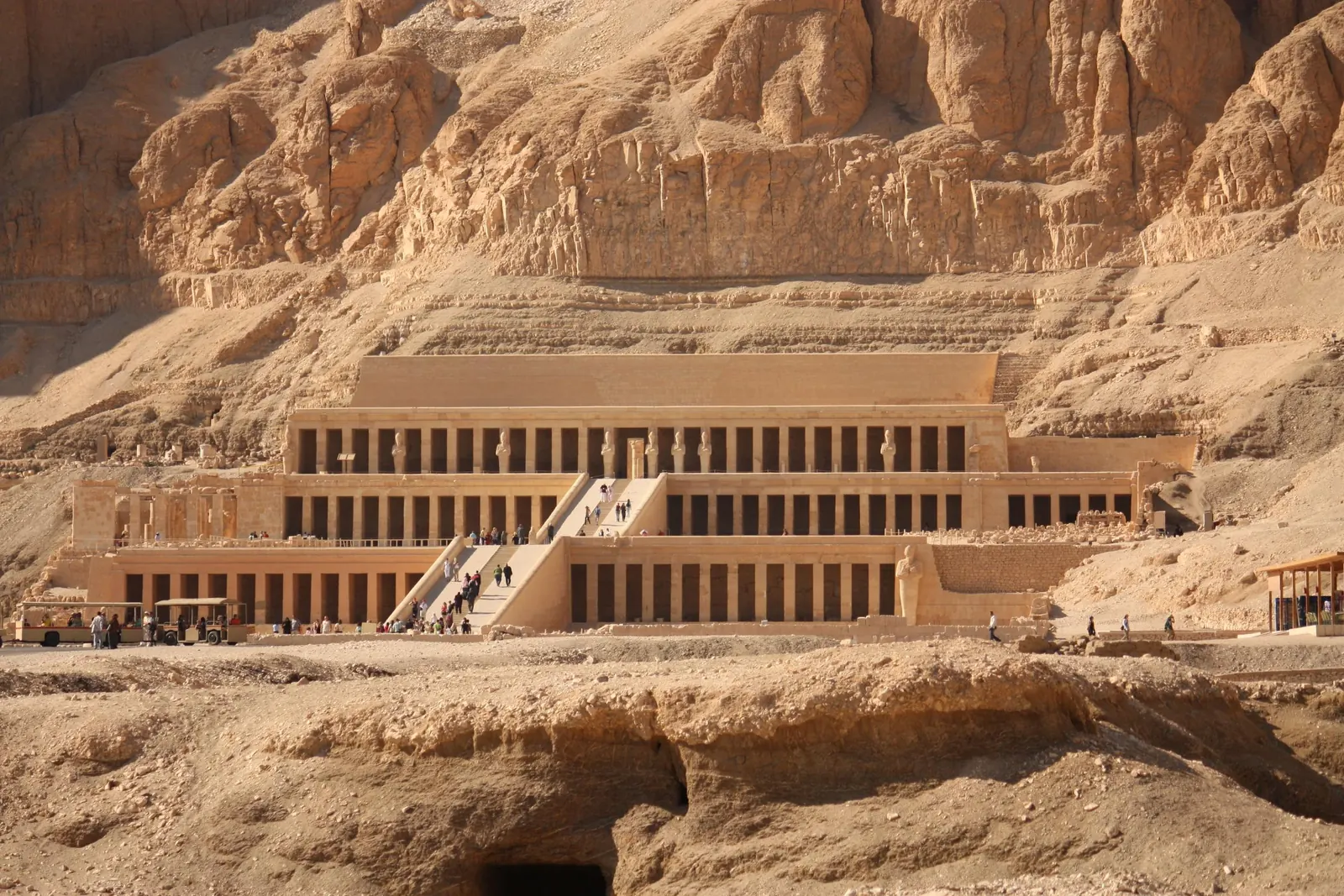
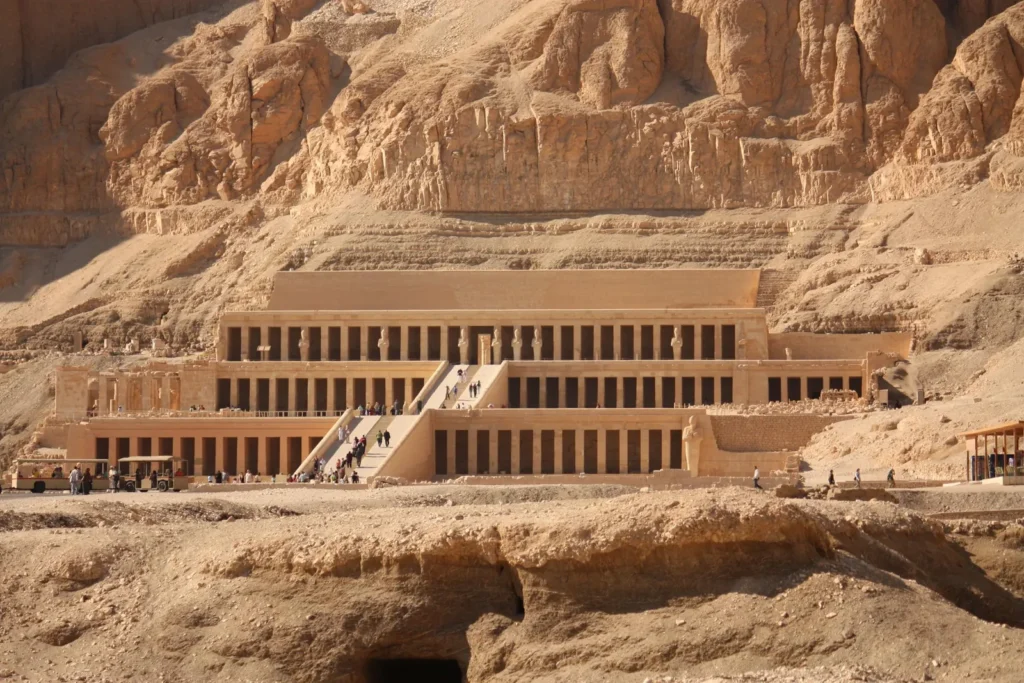
Hatshepsut Temple is a mortuary temple at Deir el-Bahari on Luxor’s West Bank, built for the queen who became pharaoh and known in ancient times as Djeser-djeseru, “the Holy of Holies.” Its colonnaded levels rise against a rock cliff, which makes it one of the most striking monuments of the Theban landscape. This guide explains who built it, how it is laid out, what its reliefs show, and how to plan a visit from Luxor or from the coast.
Key Takeaways
- The temple stands at Deir el-Bahari, on the West Bank directly across the Nile from Karnak.
- It was built for Hatshepsut, whose reign the Ministry dates to c. 1473–1458 BC.
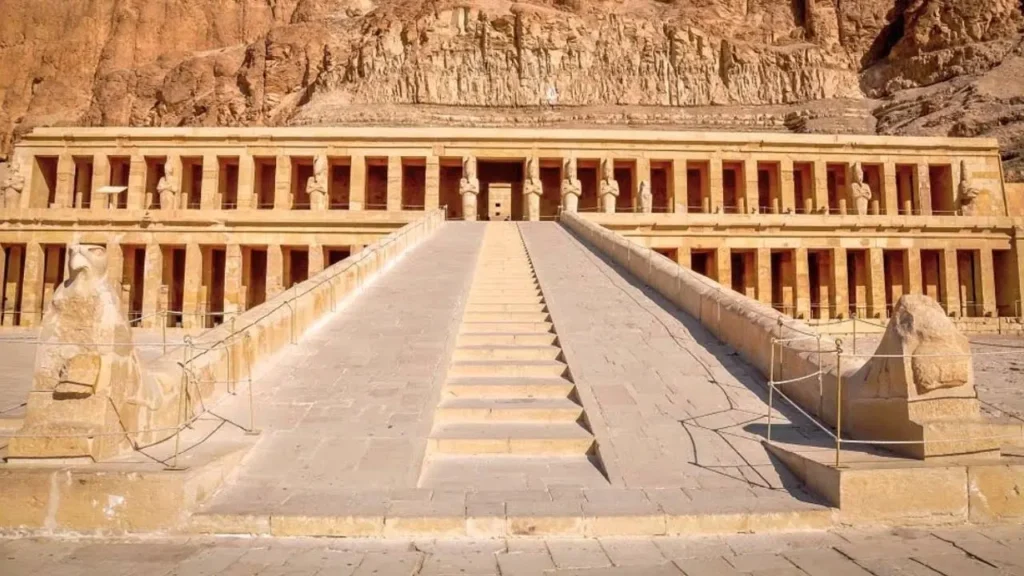
- It has three levels, and each level has a colonnade at its far end.
- Famous reliefs show the expedition to Punt and Hatshepsut’s claim to the throne.
- The Ministry of Tourism and Antiquities page lists opening hours from 6:00 a.m. to 5:00 p.m.
Who Built Hatshepsut Temple and Why?
Hatshepsut is described by the Ministry of Tourism and Antiquities as “the queen who became pharaoh.” The temple was designed by Senenmut, chief steward of Amun, and it served as her mortuary temple, the place where her cult was practiced after her death, when she became Osiris.
The site lies beneath the cliffs of Deir el-Bahari, next to the earlier Temple of Mentuhotep II. It is part of Ancient Thebes with its Necropolis, a UNESCO World Heritage Site since 1979. Because it sits across the river from Karnak, the temple also belongs to the wider story of Amun, the god who receives the most prominence here.
How the Three Levels Are Arranged
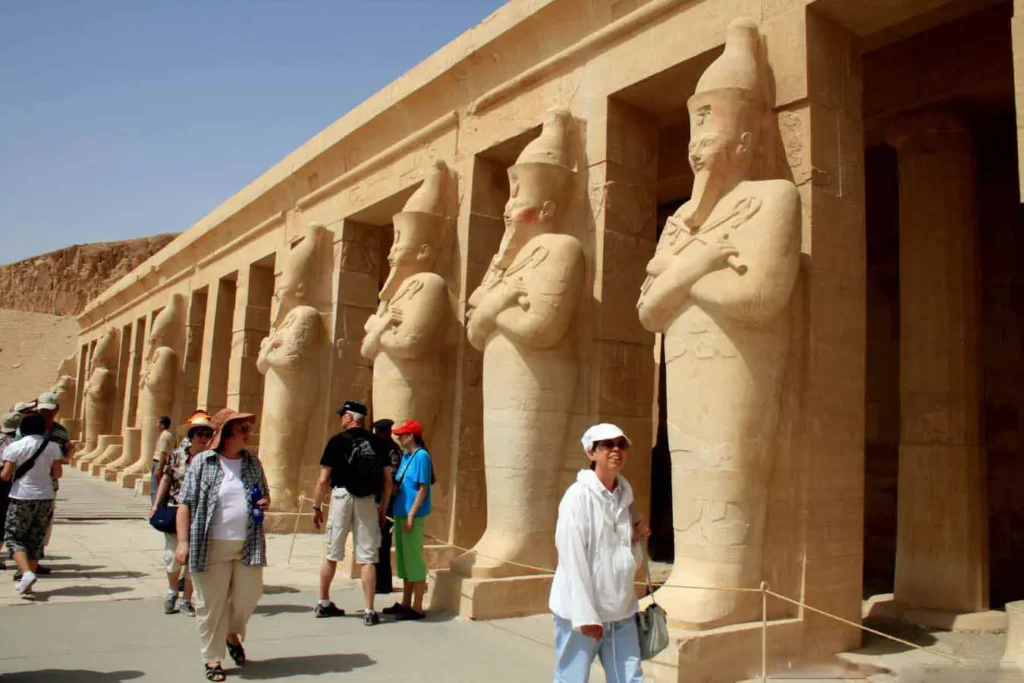
The temple rises in three levels, and each level has a colonnade at its far end. On the upper level, an open courtyard lies just beyond the portico, with mummiform statues of Hatshepsut as Osiris set against the pillars. A passage cut into the living rock leads from the courtyard to the sanctuary of Amun.
Other parts of the temple serve different cults:
- Amun: the sanctuary at the far end of the upper courtyard.
- Ra-Horakhty: an altar open to the sky and sun.
- Thutmose I: a section for the cult of Hatshepsut’s father.
- Hathor and Anubis: separate sections for the goddess and the funerary god.
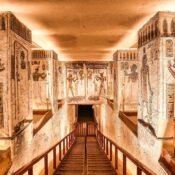
Painted reliefs on the walls show temple rituals, religious festivals and the transport of obelisks from the quarry to Karnak.
The Punt Reliefs and the Divine Birth Scenes
The portico of the Middle Platform holds two of the best-known sets of scenes. On the left side, the reliefs record Hatshepsut’s expedition to Punt, which the Ministry places near modern Eritrea. They show its people, dwellings and environment, along with the goods and animals brought back.
The opposite side presents her claim to rule. It says that Thutmose I named her his heir and that her true father was the god Amun. These scenes are not a neutral biography. They are royal messaging, designed to support her right to the throne, so it helps to read them with a guide who can explain their purpose.
What Happened to Hatshepsut’s Image?
National Geographic notes that, about twenty years after Hatshepsut died in 1458 BC, Thutmose III’s campaign against her legacy “crushed her statues, defaced her images, and erased her cartouche.” The article gives several possible motives, so the reason is still debated rather than settled.
Between 1923 and 1931, the Egyptian Expedition of the Metropolitan Museum of Art excavated fragments of her destroyed statues, which had been dumped into pits in front of the temple. That is one reason why some statues and reliefs look damaged or incomplete today. You can read more in the National Geographic article on the temple.
Opening Hours, Tickets and What to Wear
The Ministry of Tourism and Antiquities lists Hatshepsut Temple as open daily from 6:00 a.m. to 5:00 p.m., with ticket categories for foreign and Egyptian adults and students. Hours and tickets can change, so check the official Hatshepsut Temple page before you go.
The site is open and exposed, with little shade in the courtyard. Go early, wear light clothing, comfortable shoes and a hat, and carry water. If you book with us, contact our team to confirm what is included, such as admission, guide and transfers.
Getting to Hatshepsut Temple
Most visitors reach the temple from Luxor, since it lies across the Nile from the city. Our Ancient West Bank of Luxor private sightseeing and our East and West Bank full-day tour cover the West Bank with a guide. Ask our team to confirm that Hatshepsut Temple is part of your chosen itinerary.
If you are staying elsewhere, you can reach Luxor by car or by air. Browse our overday Luxor tour from Hurghada, our private day tour to Luxor from Cairo by flight or our overnight trip to Luxor from Sharm by flight.
To combine the temple with other sites, consider our Luxor East Bank highlights tour, the Luxor and Mummification museums tour or the excursion to Dendera and Abydos. Early risers can add a Luxor hot air balloon ride.
Plan a Guided Visit
A licensed Egyptologist helps you read the reliefs, the cult areas and the story of Hatshepsut’s reign. Browse our Luxor day tours, or build a longer journey with our Nile cruises, dahabiya cruises or Egypt travel packages. For more practical advice, read our Luxor travel tips.
Conclusion
Hatshepsut Temple rewards a visit that pays attention to its three levels, its carved scenes and the way its builder presented her rule. Confirm hours and access before you go. To plan your trip, contact Oceanus Tours & Travel.
FAQ
Who built Hatshepsut Temple?
Hatshepsut built it as her mortuary temple, and the Ministry credits Senenmut, chief steward of Amun, with its design.
What does Djeser-djeseru mean?
The Ministry translates Djeser-djeseru, the ancient name of the temple, as “the Holy of Holies.”
Where is Hatshepsut Temple located?
It is at Deir el-Bahari on Luxor’s West Bank, directly across the Nile from Karnak Temple.
What do the Punt reliefs show?
They record Hatshepsut’s expedition to Punt, including its people, dwellings and environment and the goods and animals brought back.
Where can I check the Hatshepsut Temple entry fee?
Fees change, so check the Ministry of Tourism and Antiquities Hatshepsut Temple page. On a private tour with us, confirm in advance whether admission is included.