
Karnak is a vast temple complex on Luxor’s east bank, and it suits visitors who want to explore a long religious and architectural history in one place. The site grew over centuries, so its halls, gateways and shrines reflect many reigns and many forms of worship. This guide covers its history, its separate precincts, what to see, opening hours and how to plan your visit, whether you come on a Luxor day tour or as part of a longer trip.
Key Takeaways
- Karnak grew through many royal building projects, not under one ruler.
- The complex includes several precincts with different dedications.
- The Great Hypostyle Hall has 134 columns.
- Allow about two to three hours for a focused visit to the main area.
- Check the Ministry of Tourism and Antiquities page for current hours and tickets.
Karnak Temple History and the Growth of Thebes
Karnak grew through successive royal building projects rather than being completed by one ruler. Its ancient name was Ipet-Sut, meaning “The Most Select of Places,” while Karnak is the modern name, usually traced to the Arabic village name for a “fortified village.”
The earliest evidence of the worship of Amun here dates to the reign of Intef II, who ruled c. 2112–2063 BC. Building continued through the New Kingdom (c. 1550–1069 BC) and the Ptolemaic Period (305–30 BC), with some additions in the Roman Period (30 BC–AD 306). Nearly every king of the New Kingdom left a mark on the site, adding halls, pylons and shrines. A pylon is a monumental gateway, often built as a pair of sloping towers.
The Great Temple of Amun became the central cult place for Amun of Thebes, and the priesthood of Amun held considerable political power. Karnak belongs to Ancient Thebes with its Necropolis, a UNESCO World Heritage Site since 1979.
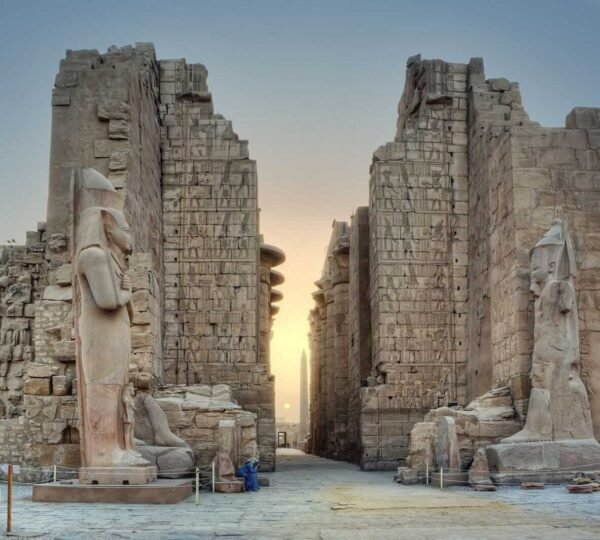
Colossal statues flank a carved pylon gateway at Karnak Temple at sunset.
How the Precincts Shape the Complex
The layout is easier to understand when you treat Karnak as several connected precincts, meaning defined areas within the larger complex, rather than as one building.
- Amun Precinct: the largest area and the focus of most visits, with the Great Temple of Amun, courts, shrines and pylons.
- Precinct of Mut: lies to the south and has its own boundaries and buildings.
- Precinct of Montu: lies to the north and has a separate dedication.
- Akhenaten’s temple to Aten: stood to the east and was distinct from the temples of Amun and the other Theban gods.
These areas show that Karnak served more than one cult. Some structures also lie beyond the central visitor route, so use the names on site maps and signs to keep the areas distinct as you explore.
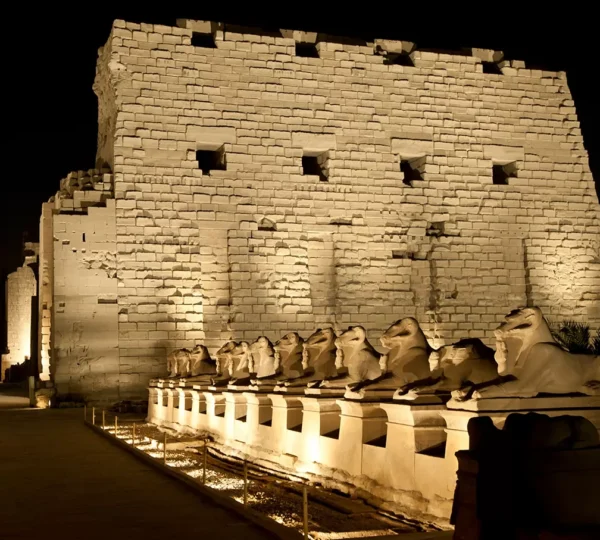
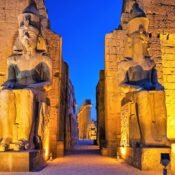
Floodlit ram-headed sphinxes line the approach to Karnak Temple.
What to See Inside Karnak Temple
The Great Hypostyle Hall
Inside the Amun Precinct, the Great Hypostyle Hall is the most recognizable space. It has 134 columns, and the twelve central columns stand 21 meters tall while the others reach about 15 meters. Construction may have begun under Amenhotep III, but most of the building work and all of the decoration date to Sety I and Ramesses II. Carved scenes and inscriptions cover the columns and walls, and they reward a slower look.
Obelisks, Akh-menu and the Sacred Lake
Hatshepsut’s larger obelisk stands almost 30 meters tall and weighs over 300 tons, which makes it easy to spot among the stone buildings. At the eastern end of Karnak, Thutmose III built the Akh-menu, a temple dedicated to various deities and to his predecessors. The Sacred Lake lies within the Amun Precinct, and priests used it to purify themselves before temple rituals.
Access to specific monuments can vary during a visit, so ask your guide what is open on the day.
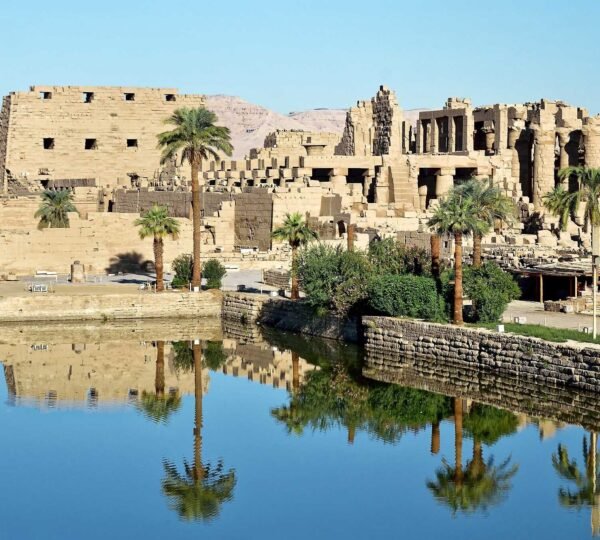
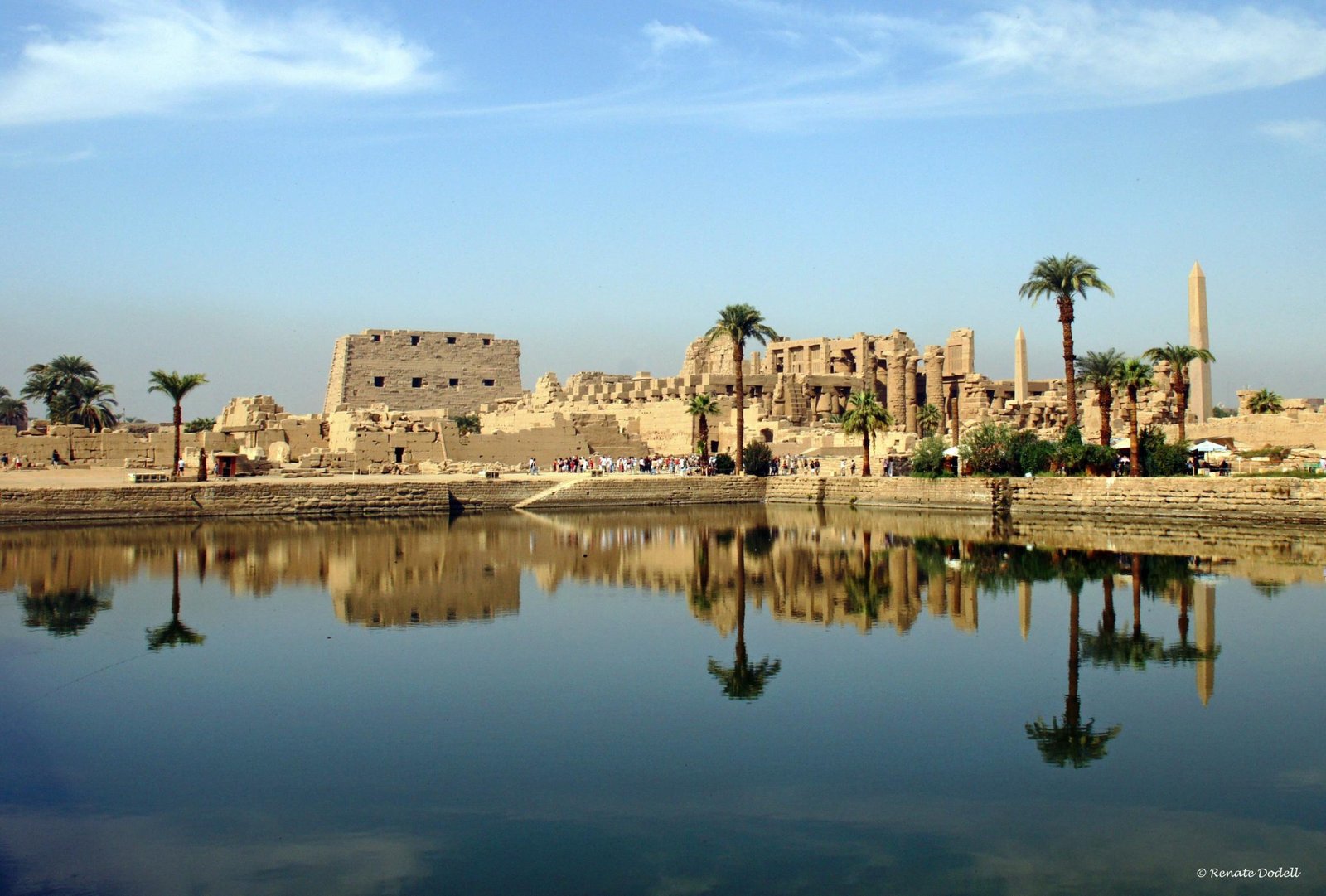
Karnak Temple mirroring on water, Egypt, Luxor (Religion) egypt,luxor,karnak temple,architecture,city,ancient,mirroring,water
The Best Time to Visit Karnak Temple
Karnak is an open-air site and much of the route is on foot, so the season matters. Winter, roughly November to February, is the most comfortable time. October, March and April are shoulder months, while summer is very hot, so arrive at opening time and take breaks in the shade. Averages cannot predict the weather on a particular date, so check the forecast close to departure. Early risers can pair a morning at Karnak with a Luxor hot air balloon ride.
Opening Hours, Tickets and What to Wear
The Ministry of Tourism and Antiquities lists Karnak as open from 6:00 a.m. to 5:00 p.m. Hours and tickets can change, so check the official Karnak page before you go. The ticket categories include entry to the Open Museum at Karnak.
If you book a guided tour with us, contact our team to confirm what is included, such as admission, guide and transfers, because a tour label alone does not define what the booking covers.
Dress modestly in light clothing that covers your shoulders and knees, and wear comfortable walking shoes, a hat and sunscreen.
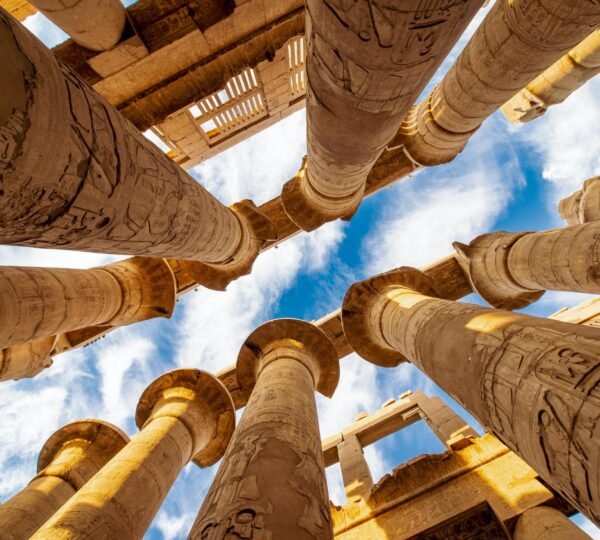
Looking up through the Great Hypostyle Hall shows the scale of its columns.
Walking Between Karnak and Luxor Temple
The Avenue of Sphinxes, about 2.7 km long, links Karnak with Luxor Temple. It was the processional route of the Opet Festival, when the cult images of Amun, Mut and Khonsu were carried to Luxor Temple, as described on the Ministry’s Luxor Temple page. Many visitors take a car between the two sites, so confirm whether the avenue is open for walking on your day.
Karnak suits visitors who want breadth, with many periods and monuments. Luxor Temple suits those who want a more concentrated visit. For a first trip, our East and West Bank full-day tour covers the main sites with a guide, and our Luxor travel tips help you plan the rest.
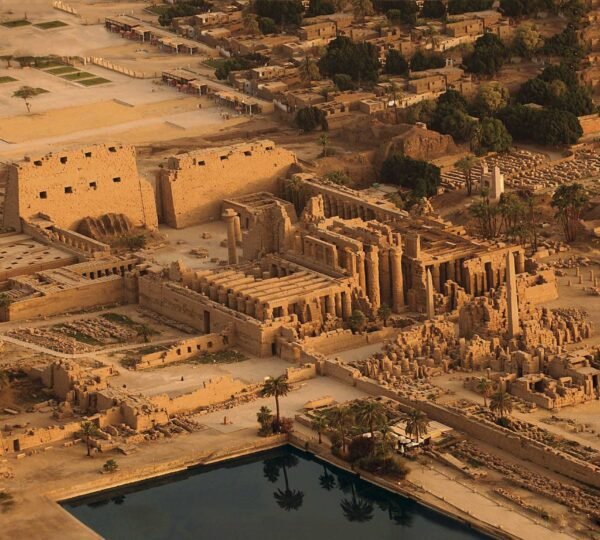
An aerial view shows the pylons, halls and Sacred Lake of Karnak Temple.
Plan a Guided Visit
A licensed Egyptologist helps you read the reliefs, precincts and ritual layout that are easy to miss alone. Browse our Luxor day tours, or build a longer journey with our Nile cruises, dahabiya cruises or Egypt travel packages.
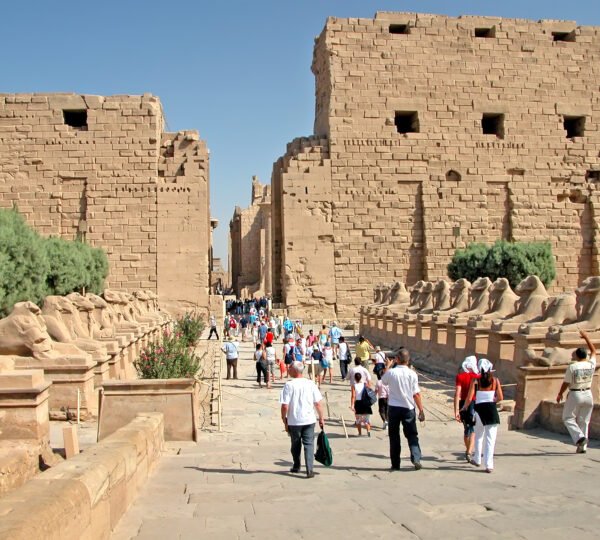
Visitors walk toward the first pylon of Karnak Temple.
Conclusion
Karnak rewards a visit planned around its scale, its separate precincts and the time needed to explore them. Before departure, confirm hours and arrangements for your chosen itinerary. To discuss a Luxor itinerary, contact Oceanus Tours & Travel.
FAQ
What does Karnak mean in English?
Karnak comes from Arabic and is usually translated as “fortified village.” Its ancient name was Ipet-Sut, meaning “The Most Select of Places.”
What is the Great Temple of Amun in Karnak?
It was the main cult site of Amun of Thebes within the Amun Precinct. Its priesthood held considerable political power in Thebes.
How long do you need at Karnak Temple?
Allow about two to three hours for a focused visit to the main area. A slower pace or a closer look at the carvings needs more time.
Where can I check the Karnak entry fee?
Fees change, so check the Ministry of Tourism and Antiquities Karnak page before your visit. On a private tour with us, confirm whether admission is included.
Can you walk from Luxor Temple to Karnak Temple?
The Avenue of Sphinxes, about 2.7 km long, links the two temples. Confirm whether it is open for walking on your day, or take a car between the sites.