
Qasr Ibrim is a ruined Nubian fortress that stands on an island in Lake Nasser. It is the only major archaeological site in Lower Nubia that was not moved or drowned when the Aswan High Dam was built, and it was lived in for more than 2,500 years. This guide covers its history, what archaeologists found there, and how to see it on a dedicated Lake Nasser cruise with Oceanus Tours & Travel.
What Is Qasr Ibrim?
Qasr Ibrim is a hilltop town that once overlooked the Nile in Lower Nubia, the stretch of the river between Aswan and the Sudanese border. People lived there from around the eighth century BCE until the early nineteenth century CE, and it served as a fortress, a religious centre and a trading post.
The name is Arabic for “castle of Ibrim”. The Greeks and Romans called the place Primis, and the Meroitic name was Pedeme.
Where Is Qasr Ibrim on Lake Nasser?
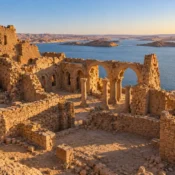
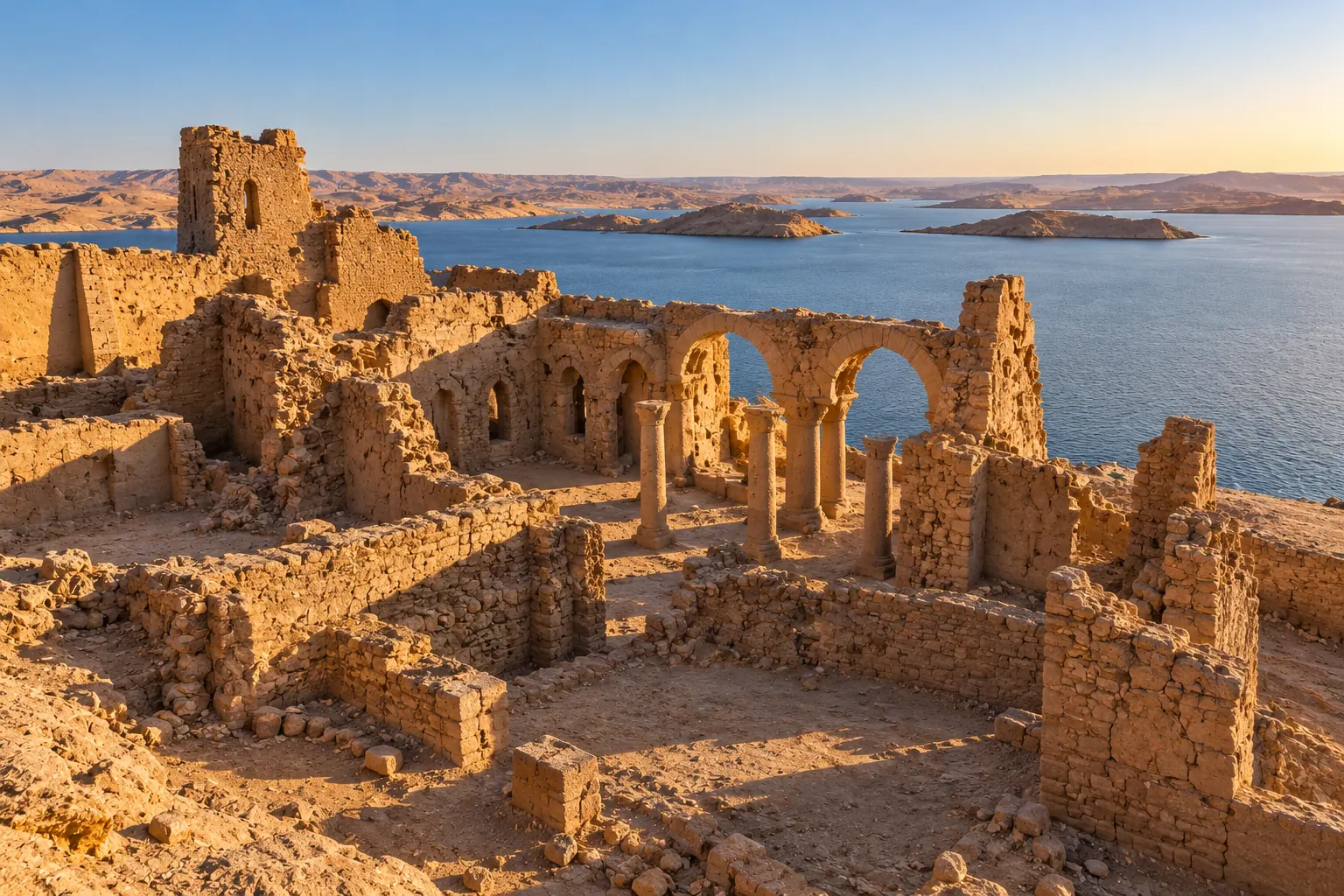
Qasr Ibrim lies on the eastern side of Lake Nasser, north of Abu Simbel. Before the dam it stood on a high cliff above the river. Today water surrounds the hill, so it is an island and cannot be reached by road.
Why Did Qasr Ibrim Survive the Aswan High Dam?
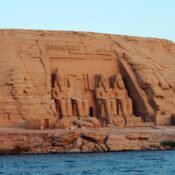
The Aswan High Dam created Lake Nasser and flooded the Nile Valley upstream. Through the UNESCO campaign to save the monuments of Nubia, many temples were cut into blocks and rebuilt on higher ground, as happened at Abu Simbel.
Qasr Ibrim was different. Its main settlement stood high enough to stay above the rising water, so it remained in its original place. The lower ground around it, including areas near the old riverbank, was flooded. What survives is the high point of the town, not the whole ancient landscape.
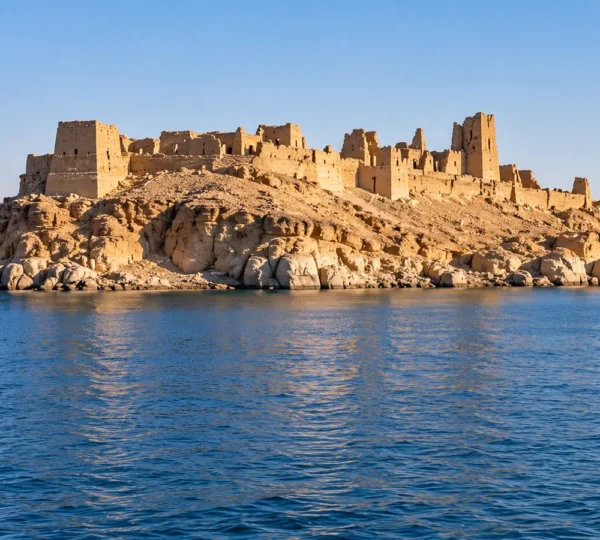
Qasr Ibrim is the only major Nubian site that still stands above water, now an island on Lake Nasser.
A Short History of Qasr Ibrim
Egyptian and Kushite Periods
The earliest inscription at the site is a stela from the reign of Amenhotep I. Later, Kushite and Meroitic rulers held the hill, and the fortress sat on a frontier that several powers wanted to control.
Roman Occupation
Under the prefect Gaius Petronius, during the reign of Augustus, the site was partly rebuilt as a Roman fortress. It was probably held until about 100 CE or later. Roman soldiers left behind sandals, leather and woollen cloth.
A Christian Centre
Christianity arrived in the sixth century, when a church was built inside the walls of an older temple. The Taharqa Church, probably built between 542 and 580 CE, is thought to be one of the earliest churches in Nubia. After the area joined the kingdom of Makuria in the early eighth century, Qasr Ibrim became an important Christian town, and a cathedral was built in the first half of that century. Bishop Timothy, the last known bishop of Faras, lived here and was buried in the cathedral around 1375.
Ottoman Rule and Abandonment
In the sixteenth century a unit of Bosnian soldiers in the Ottoman army occupied the site and used part of the cathedral as a mosque. Many of them stayed and married into the local Nubian community. The last occupants were driven out by artillery fire in 1813.
What Archaeologists Found at Qasr Ibrim
The desert air is almost rainless, so materials that normally rot have survived. Excavations by the Egypt Exploration Society began in 1963 and have continued at intervals since.
- Documents: texts in nine languages or scripts, including Greek, Latin, Coptic, Arabic and Old Nubian. Qasr Ibrim has produced the largest collection of Old Nubian documents ever found.
- Latin poetry: a papyrus with verses by the Roman poet Cornelius Gallus, widely described as the oldest surviving manuscript of Latin poetry.
- Food and crops: sorghum samples dating from about 800 BCE to 1800 CE, and pottery residues showing that people used date palm and doum palm fruit.
- Textiles: Roman woollen cloth in bright colours, and later undyed cotton fabrics from the Meroitic period.
Together these finds show Qasr Ibrim as a working frontier community with trade links far beyond Nubia.
Seeing Qasr Ibrim on a Lake Nasser Cruise
Today the island is closed to everyone except archaeologists, so the way to see Qasr Ibrim is from the water. Oceanus Tours & Travel runs a dedicated Lake Nasser cruise that includes viewing the site, alongside the temples on the lakeshore such as Abu Simbel, Kalabsha and Amada.
The view depends on the vessel, the weather and the water level, so we cannot promise a particular angle or viewing time. Ask our team to confirm what your sailing includes before you book, or contact us to plan a private Lake Nasser programme.
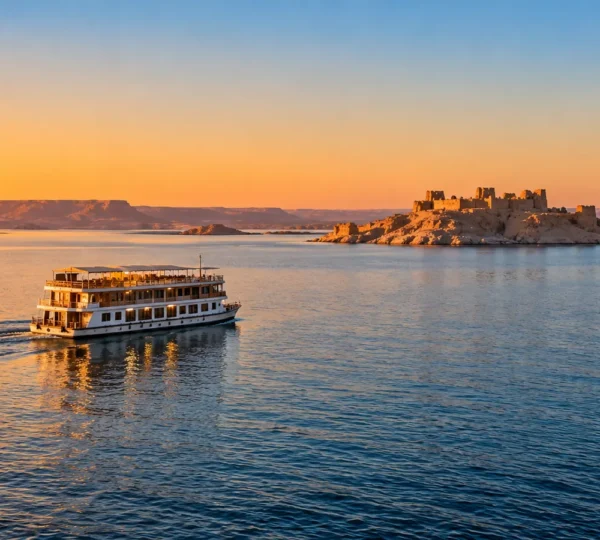
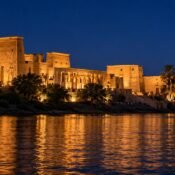
A Lake Nasser cruise glides past Qasr Ibrim as the sun sets over the water
Frequently Asked Questions About Qasr Ibrim
Can you go ashore at Qasr Ibrim?
No. The island is closed to all but archaeologists, so visitors see it from the water.
How old is Qasr Ibrim?
People lived there from about the eighth century BCE until 1813 CE, which is more than 2,500 years.
Why is Qasr Ibrim important?
It is the only major archaeological site in Lower Nubia that stayed in its original place above the lake, and its dry conditions preserved documents, textiles and food remains.
Is Qasr Ibrim near Abu Simbel?
It lies north of Abu Simbel on the same lake, but they are separate sites. Abu Simbel was cut up and rebuilt, while Qasr Ibrim stayed where it stood.